
Payroll is one of the most important responsibilities of any business. Every payday,
employees expect to receive the correct amount on time, while employers must ensure that
salaries, deductions, taxes, and government contributions are calculated and reported
properly. Behind what may seem like a simple salary release is a complex process involving
Philippine labor laws, tax regulations, and mandatory government contributions.
This is why payroll compliance in the Philippines is more than simply making sure employees
receive their salaries. Businesses must follow applicable rules from the Department of Labor
and Employment (DOLE), Bureau of Internal Revenue (BIR), Social Security System (SSS),
Philippine Health Insurance Corporation (PhilHealth), and Home Development Mutual Fund
(Pag-IBIG), among others.
Failure to comply can result in incorrect deductions, employee disputes, penalties,
interest, or other legal and financial consequences. For businesses, especially growing
organizations, keeping up with payroll requirements can become increasingly difficult when
calculations are handled manually.

Fortunately, modern payroll systems can help businesses organize payroll information, automate
calculations, generate reports, and reduce the risk of errors.
This guide explains what payroll compliance means in the Philippines, the major requirements employers
should understand, common compliance challenges, and how PayrollPinas can help businesses manage payroll
more efficiently.
Payroll compliance refers to an employer's responsibility to process employee compensation according to
applicable Philippine laws, regulations, and government requirements.
It covers much more than calculating an employee's basic salary.
A compliant payroll process may involve correctly calculating wages, overtime, holiday pay, night shift
differential, deductions, income tax, statutory contributions, and other compensation components.
Employers must also maintain appropriate payroll records and submit required reports and payments within
prescribed deadlines.
Payroll compliance therefore requires businesses to maintain accurate employee information and
consistently apply the correct rules to every payroll cycle.
For employers, compliance is both a legal responsibility and an important part of maintaining employee
trust.
Employees depend on their salaries to manage their daily lives and financial responsibilities. When
payroll
is inaccurate or delayed, the impact can go far beyond a simple accounting error.
Incorrect deductions, missing overtime pay, or inaccurate government contributions can create
frustration
and disputes between employees and employers.
From the business perspective, payroll errors can also become expensive. Repeated mistakes may require
corrections, additional administrative work, and potentially penalties or interest when government
obligations are not properly fulfilled.
A strong payroll compliance process helps businesses achieve several important goals:
Compliance also creates a more professional and trustworthy workplace environment.
Payroll in the Philippines involves several areas of regulation, which can make compliance challenging
for employers.
The basic payroll process generally begins with an employee's compensation structure. Employers then
need to consider attendance, working hours, overtime, holidays, leaves, bonuses, allowances, deductions,
and applicable taxes and contributions.
Different government agencies oversee different aspects of these responsibilities.
The BIR manages income tax requirements, while SSS, PhilHealth, and Pag-IBIG administer mandatory social
insurance and benefit programs.
Meanwhile, labor standards and employee compensation requirements fall under the broader framework of
Philippine labor regulations.
Because these requirements can change over time, employers need reliable processes for monitoring
updates and applying them correctly.
One of the fundamental aspects of payroll compliance is ensuring employees receive compensation in
accordance with applicable labor standards.
Employers need to properly determine the applicable minimum wage based on the employee's location and
classification. Compensation may also need to account for overtime work, special days, regular holidays,
rest days, and night shift differentials depending on the employee's schedule and circumstances.
Incorrectly applying wage rules can result in underpayment and employee disputes.
For companies with employees working different schedules, branches, or locations, payroll calculations
can become particularly complicated.
Automating attendance and payroll information can help reduce the risk of manually applying incorrect
rates or working-hour calculations.
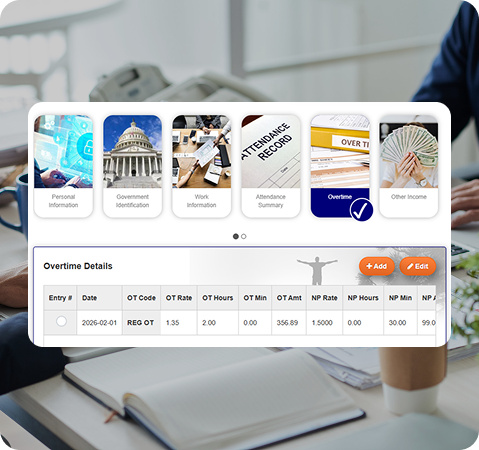
Employees who work beyond their normal working hours may be entitled to overtime
compensation under applicable labor rules.
Similarly, employees working on regular holidays, special non-working days, or rest days may
have different compensation requirements depending on the circumstances.
These calculations can become difficult when employees have varying schedules or when
multiple types of premium pay apply to the same payroll period.
Payroll systems can help businesses calculate these amounts consistently by connecting
attendance information with payroll rules.
However, businesses should always ensure that their payroll configuration reflects their
actual employment policies and applicable regulations.
One of the most important parts of Philippine payroll compliance is the accurate handling of mandatory
government contributions.
Employers generally need to process contributions for SSS, PhilHealth, and Pag-IBIG based on applicable
rules and employee compensation.
These contributions typically involve both employer and employee shares, which must be calculated
correctly and remitted according to government requirements.
Incorrect contribution calculations can cause discrepancies in employee records and create additional
work when corrections are required.
For businesses managing many employees, manually calculating and updating these contributions can become
especially difficult.
A payroll system designed for Philippine requirements can help automate calculations and maintain more
consistent records.
Income tax is another major component of payroll compliance.
Employers are generally responsible for withholding the appropriate amount of tax from employees'
compensation and remitting the withheld amount to the BIR in accordance with applicable requirements.
Tax calculations can become complicated because employees may have different compensation levels,
taxable benefits, bonuses, and other forms of income.
Businesses also need to maintain appropriate documentation and complete required reporting.
Because tax regulations may change, payroll teams should regularly review BIR requirements and ensure
their payroll processes remain updated.
Automated payroll software can reduce the amount of manual calculation involved, but employers remain
responsible for ensuring that their payroll setup and processes are accurate.
Another important consideration is 13th month pay.
Rank-and-file employees generally have a statutory entitlement to 13th month pay, subject to applicable
Philippine regulations. Employers need to calculate this benefit correctly and release it within the
required period.
The calculation is generally based on the employee's applicable basic salary earned during the calendar
year.
Businesses may also provide additional benefits beyond statutory requirements, depending on company
policy or employment agreements.
Maintaining accurate payroll records throughout the year makes it significantly easier to calculate
these benefits correctly when they become due.
Employee leave management can also affect payroll calculations.
Depending on applicable laws, company policies, and employee classifications, businesses may
need to account for different types of leave, including service incentive leave and other
statutory or company-provided benefits.
If leave records are maintained separately from payroll, HR teams may need to manually
transfer information between systems.
This creates opportunities for errors.
An integrated HR and payroll environment can help ensure that approved attendance and leave
information flows into payroll accurately.

Payroll compliance isn't only about making calculations correctly. Businesses must also maintain
accurate records.
Payroll records may include employee information, compensation details, attendance records, deductions,
government contributions, tax information, payslips, and other supporting documents.
Organized records make it easier to respond to employee questions, conduct internal reviews, prepare
reports, and address government inquiries when necessary.
Digital payroll systems can make record management significantly easier by centralizing payroll
information and reducing dependence on paper documents and disconnected spreadsheets.
Many payroll problems don't happen because businesses intentionally ignore regulations. They happen because payroll is complicated and often relies on manual processes.
Common challenges include:
These issues become more difficult as the number of employees increases.
A company with ten employees may be able to review payroll manually. A company with several hundred
employees requires a much more structured and automated approach.
Payroll software can significantly reduce the administrative burden associated with payroll compliance.
Instead of manually calculating every salary component, businesses can configure payroll rules within a
centralized system. Employee information, attendance, overtime, leave, deductions, taxes, and
contributions can then be processed systematically.
Automated calculations reduce repetitive data entry and help minimize human errors.
Payroll software can also generate payslips and reports, making it easier for HR and finance teams to
review payroll information and maintain documentation.
However, payroll software should not be viewed as a replacement for professional judgment. Businesses
still need to monitor regulatory updates and ensure that their payroll system is properly configured.
Technology works best when combined with sound payroll policies and knowledgeable HR or finance
professionals.
Managing payroll compliance manually can become increasingly difficult as a business grows. PayrollPinas
provides a payroll solution designed to help Philippine businesses simplify payroll processing while
managing the requirements associated with local payroll.
The platform helps automate essential payroll processes, including salary calculations, deductions,
government contributions, tax-related computations, payslip generation, and payroll reporting.
By centralizing payroll information, PayrollPinas reduces the need for repetitive spreadsheet work and
helps HR and finance teams maintain more organized payroll records.
The platform can also work alongside attendance and HR processes, allowing businesses to create a more
connected workflow between employee information, working hours, leave records, and payroll.
For growing businesses, this can make payroll processing faster and easier to manage while reducing the
risk of avoidable manual errors.
Most importantly, PayrollPinas is designed with the needs of Philippine businesses in mind. As payroll
regulations and government requirements evolve, having a system built around local payroll requirements
gives organizations a stronger foundation for managing their payroll responsibilities.
Payroll compliance should not be treated as something businesses check only when problems arise.
Organizations should establish a consistent payroll process that includes regular review, accurate
employee data, proper approvals, and timely government reporting.
HR and finance teams should also clearly define who is responsible for payroll preparation, review,
approval, and submission.
Regular audits can help identify discrepancies before they become larger problems.
Businesses should also keep track of regulatory changes and update payroll systems and internal policies
when necessary.
A proactive approach is much more effective than correcting payroll problems after they have already
affected employees or government records.
There is no specific employee count at which every company must adopt payroll software.
However, certain signs indicate that manual payroll is becoming unsustainable.
If payroll takes several days to complete, HR spends too much time checking spreadsheets, employees
frequently question salary calculations, or the company is expanding into multiple locations, automation
may be worth considering.
Businesses should also consider automation when payroll involves complex schedules, overtime, multiple
compensation structures, or a growing number of employees.
The earlier a business establishes an organized payroll system, the easier it becomes to scale without
creating unnecessary administrative complexity.
Payroll compliance in the Philippines is a responsibility that businesses cannot afford to overlook.
From wage requirements and overtime pay to income tax, government contributions, 13th month pay, and
payroll recordkeeping, employers must manage multiple requirements accurately and consistently.
The challenge is that payroll becomes increasingly complex as businesses grow. More employees mean more
attendance records, more deductions, more calculations, and more opportunities for human error.
This is why payroll automation has become an important part of modern business operations.
A reliable payroll system can help organizations streamline calculations, organize records, generate
reports, and reduce the administrative burden associated with payroll processing. While technology does
not replace the need for proper HR and financial oversight, it provides businesses with the tools needed
to manage payroll more efficiently.
For Philippine businesses looking to simplify payroll and strengthen their payroll processes,
PayrollPinas provides a practical solution built around local payroll requirements. By bringing payroll
calculations, employee information, government contributions, tax-related processes, payslips, and
reporting into a more organized digital workflow, PayrollPinas helps businesses spend less time managing
spreadsheets and more time focusing on their people and growth.
Ultimately, payroll compliance is not simply about avoiding penalties. It is about paying employees
correctly, protecting the business, maintaining accurate records, and building trust within the
organization.
As your business grows, investing in the right payroll technology can make compliance easier to manage
and create a stronger foundation for sustainable growth.


