
Managing employees has become much more complex than simply processing salaries at the end
of every month. Businesses today need to monitor attendance, manage leave requests, track
employee records, calculate government contributions, ensure compliance with labor laws, and
provide employees with a better workplace experience. As organizations grow, relying on
spreadsheets and manual processes quickly becomes inefficient and increases the risk of
costly mistakes.
This is why businesses are increasingly investing in digital HR and payroll solutions.
However, many business owners, HR managers, and finance teams often encounter two terms that
appear similar but actually serve different purposes: HRIS and Payroll Software.
The question many companies ask is:
Do we need an HRIS, payroll software, or both?

The answer depends on your organization's size, operational requirements, and long-term growth plans.
Understanding the differences between these two systems can help you invest in the right solution while
improving efficiency, compliance, and employee satisfaction.
In this guide, we'll explain the differences between HRIS and payroll software, their advantages, when
to choose each solution, and why businesses across the Philippines trust PayrollPinas for modern payroll
management.
Payroll software is a system specifically designed to automate the payroll process. Instead of manually
calculating salaries, deductions, taxes, overtime, and government contributions, payroll software
performs
these calculations accurately and consistently.
For many businesses, payroll is one of the most critical monthly tasks. A single error in payroll can
affect
employee trust, create compliance issues, and even result in penalties from government agencies.
Payroll software simplifies this process by automating calculations while ensuring that employees
receive
the correct salary on time.
Typical payroll software includes features such as:
Rather than spending days checking formulas and correcting spreadsheet errors, payroll officers can process payroll in significantly less time while maintaining accuracy.
A Human Resource Information System (HRIS) is a broader platform that manages employee information
throughout the entire employee lifecycle.
Unlike payroll software, which focuses mainly on salary processing, an HRIS helps HR departments
organize and automate daily human resource operations.
An HRIS serves as a central database where employee information is securely stored and managed.
This typically includes employee profiles, employment history, attendance records, leave balances,
performance records, organizational charts, training information, and much more.
Instead of maintaining multiple spreadsheets for employee records, HR teams can access everything in one
centralized platform.
An HRIS helps companies become more organized while reducing paperwork and administrative work.
Although HRIS and payroll software are closely related, they serve different business purposes.
Payroll software is primarily responsible for paying employees accurately and ensuring compliance with
payroll regulations.
An HRIS, on the other hand, manages employee information and HR processes across the organization.
Think of payroll software as one important function within the broader scope of human resource
management.
Here's a simple comparison:
| Feature | HRIS | Payroll Software |
|---|---|---|
| Employee Database | ✓ | Limited |
| Attendance Management | ✓ | May integrate |
| Leave Management | ✓ | Limited |
| Employee Self-Service | ✓ | Sometimes |
| Performance Management | ✓ | No |
| Recruitment Records | ✓ | No |
| Payroll Processing | Sometimes | ✓ |
| Government Contribution | Sometimes | ✓ |
| Payslip Generation | Sometimes | ✓ |
| Tax Computation | Sometimes | ✓ |
Many modern HR platforms now include payroll modules, while advanced payroll software can also integrate with HR systems. However, understanding their primary functions helps businesses determine what they truly need.

The confusion usually happens because many software providers market their products as "HR
and Payroll Systems."
In reality, some solutions offer only payroll automation, while others include complete HR
management with payroll integration.
Businesses purchasing software without understanding these differences may end up paying for
features they rarely use or, worse, selecting a system that lacks critical payroll
functionality.
Before choosing a solution, companies should evaluate their current challenges.
Payroll software offers immediate improvements for businesses that want faster and more accurate payroll
processing.
One of its biggest advantages is automation. Manual payroll often involves repetitive calculations, data
entry, and multiple verification steps. Payroll software eliminates much of this workload, reducing
human error and saving valuable time every payroll cycle.
Accuracy is another major benefit. Automated calculations help ensure salaries, deductions, taxes,
overtime, and government contributions are computed correctly according to current regulations.
Compliance also becomes much easier. Payroll software helps businesses prepare mandatory reports
required by Philippine government agencies, reducing the risk of penalties caused by incorrect filings
or missed deadlines.
Payroll software also improves security. Sensitive salary information is stored digitally with
controlled access, minimizing the risks associated with paper records or unsecured spreadsheets.
As companies grow, payroll software can easily accommodate additional employees without requiring
businesses to redesign their entire payroll process.
While payroll software focuses on salary processing, an HRIS improves the overall efficiency of the
Human Resources department.
Employee information is stored in one centralized location, making it easier to update records and
retrieve important documents whenever needed.
HR teams spend less time on repetitive administrative tasks because processes like leave requests,
attendance monitoring, employee onboarding, and record management become automated.
Managers also gain better visibility into workforce data, allowing them to make informed decisions based
on employee attendance, turnover, performance, and workforce planning.
Employee self-service portals further improve efficiency by allowing employees to update personal
information, view leave balances, download documents, and submit requests without relying entirely on HR
personnel.
Overall, an HRIS allows HR professionals to focus more on employee engagement and strategic initiatives
rather than paperwork.
Yes.
Many small and medium-sized businesses successfully operate using payroll software alone.
If your company already manages employee information manually or has relatively simple HR
processes, payroll software may be sufficient.
Businesses with fewer employees often prioritize accurate payroll processing before
investing in a full HRIS.
However, as organizations continue to grow, HR administration becomes more demanding.
Employee records increase, attendance becomes more difficult to manage, leave requests
multiply, and reporting requirements expand.
At this stage, integrating payroll with an HRIS becomes increasingly beneficial.
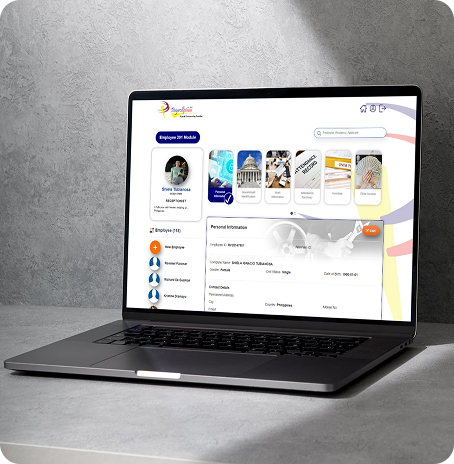
Companies experiencing rapid growth often benefit the most from combining HRIS and payroll software.
When employee information flows automatically between HR and payroll, duplicate data entry is
eliminated.
Attendance records, approved leaves, overtime, employee status changes, and salary adjustments can
automatically update payroll calculations.
This integration significantly reduces errors while saving HR and payroll teams many hours each month.
Businesses commonly choose both systems when they:
Integrated systems create a smoother workflow from employee onboarding all the way to payroll processing and employee offboarding.
For businesses looking for reliable payroll automation, PayrollPinas provides a comprehensive payroll
solution designed specifically for Philippine businesses.
Instead of relying on complicated spreadsheets and manual computations, PayrollPinas automates payroll
processing while ensuring compliance with local labor regulations and government requirements.
The platform is built to simplify payroll management for businesses of different sizes, whether you're
processing payroll for a small team or managing hundreds of employees.
PayrollPinas helps businesses reduce payroll errors, improve processing speed, and maintain accurate
records through intelligent automation.
Key capabilities include payroll computation, tax calculations, government contributions, overtime
computation, leave integration, payroll reporting, payslip generation, and compliance support.
Because PayrollPinas is designed with Philippine payroll requirements in mind, businesses can
confidently manage payroll while adapting to changing regulations.
There is no one-size-fits-all answer when deciding between HRIS and payroll software.
If your biggest challenge is ensuring employees are paid accurately and on time, payroll software is
usually the best investment.
If your HR department spends excessive time managing employee records, attendance, leave requests, and
administrative processes, an HRIS provides much greater value.
For many growing organizations, combining both systems delivers the greatest efficiency.
The important thing is choosing software that can scale with your business rather than solving only
today's problems.
As your workforce expands, integrated HR and payroll systems become increasingly valuable in reducing
manual work, improving compliance, and supporting better employee experiences.
One common mistake is selecting software based solely on price. While affordability matters, businesses
should also consider scalability, ease of use, customer support, compliance updates, and integration
capabilities. A cheaper solution may become more expensive over time if it requires manual workarounds
or frequent upgrades.
Another mistake is overlooking compliance. Philippine payroll regulations change periodically, and using
software that isn't updated can lead to incorrect tax calculations or government contributions. Choosing
a provider that actively maintains compliance features is essential.
Some companies also underestimate the importance of user experience. A system that is difficult to learn
or navigate can slow adoption and reduce productivity. Modern software should simplify daily tasks
rather than create additional complexity.
Finally, businesses often fail to think long term. Selecting a solution that supports future growth
helps avoid the cost and disruption of switching systems later.
Both HRIS and payroll software play important roles in modern business operations, but they solve
different challenges.
An HRIS focuses on managing employees throughout their entire employment journey, while payroll software
specializes in ensuring employees are paid accurately, efficiently, and in compliance with Philippine
regulations.
For many organizations, payroll software is the first step toward digital transformation because payroll
accuracy directly impacts employee satisfaction and business compliance. As businesses grow, integrating
payroll with HR functions creates even greater efficiency by connecting employee data, attendance, leave
management, and payroll into a unified workflow.
If your goal is to eliminate manual payroll calculations, reduce processing time, improve compliance,
and ensure every employee is paid correctly, PayrollPinas provides a dependable payroll solution built
specifically for Philippine businesses. By automating complex payroll processes and supporting local
regulatory requirements, PayrollPinas helps companies save time, reduce errors, and focus on growing
their business instead of managing spreadsheets.
Whether you're a startup, SME, or large enterprise, understanding the difference between HRIS and
payroll software is the first step toward choosing the right technology. Investing in the right solution
today can improve operational efficiency, strengthen compliance, and create a better experience for both
your HR team and your employees.


